Language

Hindi vs Urdu: Understanding the Differences & Similarities

Explore the key differences and similarities between Hindi and Urdu. Learn about script, vocabulary, grammar, and cultural aspects.
11 MIN READ
Written by English To Hindi Team
Hindi vs Urdu: Understanding the Differences & Similarities

Hindi vs Urdu: Understanding the Differences & Similarities

Hindi and Urdu are often considered two registers of the same language. This guide explains their similarities, differences, and mutual intelligibility.

The Big Picture

Key Fact: Spoken Hindi and Urdu are largely the same. The main differences are in:

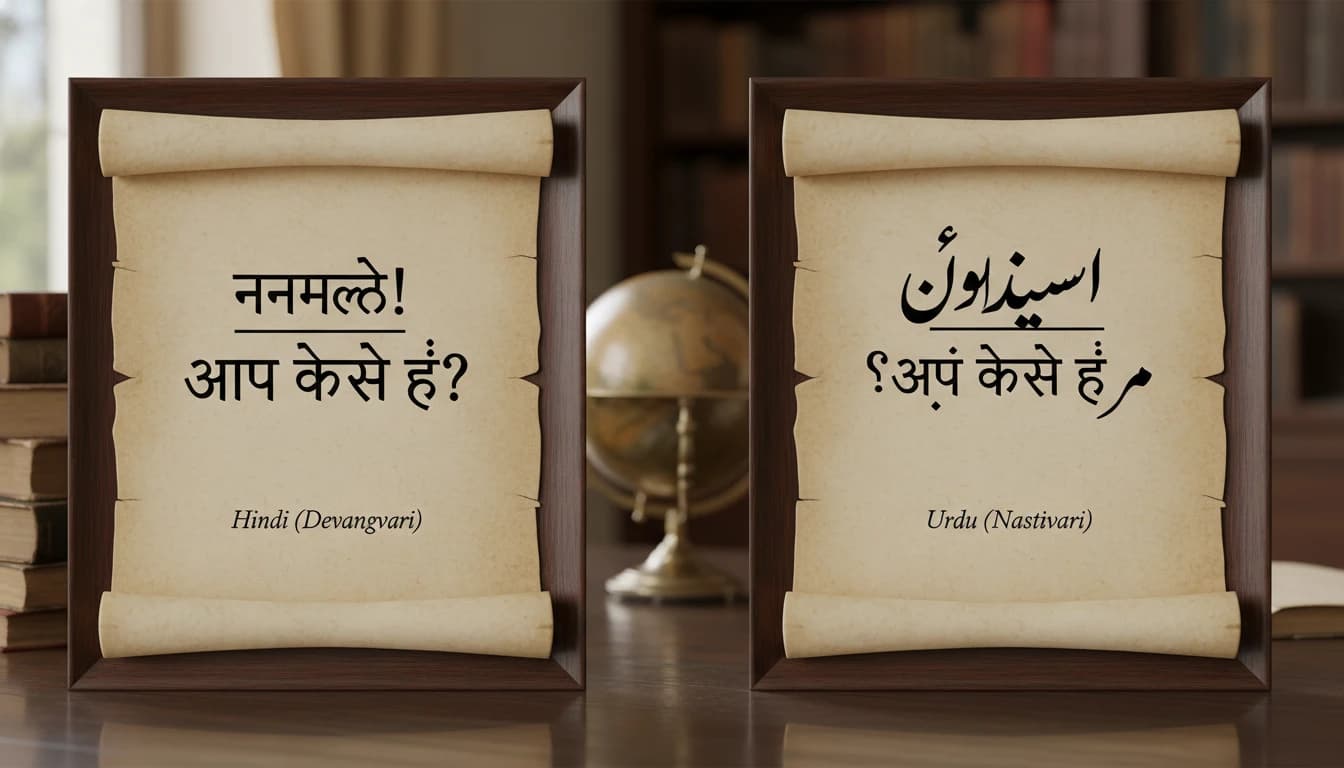
  • **Script**: Hindi uses Devanagari (देवनागरी), Urdu uses Persian-Arabic (نستعلیق)
  • **Formal vocabulary**: Hindi borrows from Sanskrit, Urdu from Arabic/Persian
  • **Geography**: Hindi in India, Urdu in Pakistan (though both spoken in both countries)
  • Historical Background

    Shared Origins

    Both evolved from:

  • **Hindustani**: Common language of North India
  • **Khari Boli**: Dialect of Delhi region
  • **Mughal period**: Persian/Arabic influences
  • Divergence

    Political and cultural factors led to:

  • Hindi standardization with Sanskrit vocabulary
  • Urdu standardization with Persian/Arabic vocabulary
  • Script Differences

    Hindi (Devanagari)

  • Written left to right
  • Each letter represents a sound
  • Horizontal line connects letters
  • Learn to write Hindi with our [Devanagari guide](/blog/devanagari-script-writing).

    Urdu (Nastaliq)

  • Written right to left
  • Cursive, flowing script
  • Letters connect fluidly
  • Vocabulary Comparison

    Everyday Words (Same)
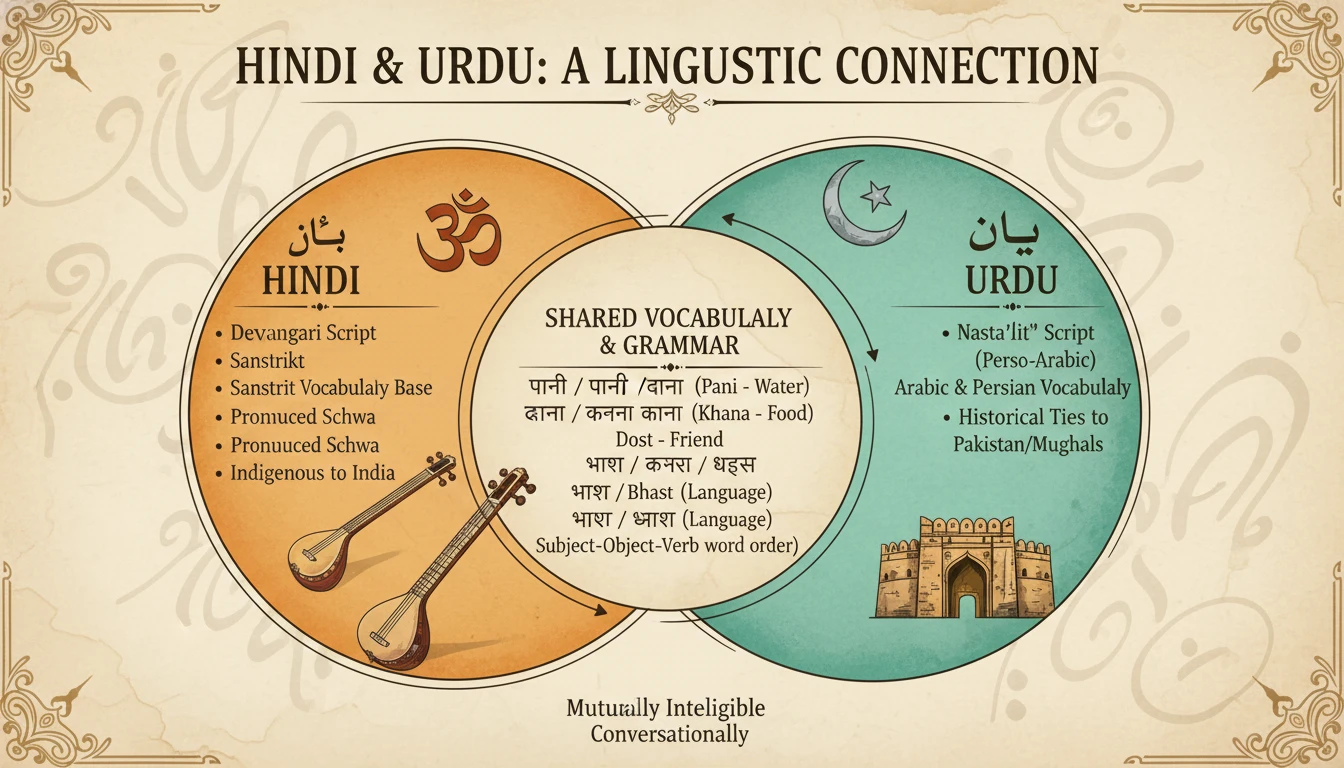
  • पानी (paani) / پانی (pānī) - Water
  • खाना (khaana) / کھانا (khānā) - Food
  • Hindi vs Urdu: Understanding the Differences & Similarities - Visual Guide
  • घर (ghar) / گھر (ghar) - House
  • These common words are identical in both languages.

    Formal/Literary Words (Different)

    Example: "Library"

  • Hindi: पुस्तकालय (pustakalaya) - from Sanskrit
  • Urdu: کتب خانہ (kutub khana) - from Arabic/Persian
  • Example: "Good"

  • Hindi (formal): उत्तम (uttam) - Sanskrit
  • Urdu (formal): عمدہ (umda) - Persian
  • Both (informal): अच्छा/اچھا (accha)
  • Grammar Similarities

    Both Share:

  • Subject-Object-Verb (SOV) word order
  • Gender system (masculine/feminine)
  • Similar verb conjugations
  • Postpositions instead of prepositions
  • Practice grammar with our [sentence examples](/sentences/examples).

    Mutual Intelligibility

    Spoken Language

  • **Everyday conversation**: 80-90% mutual intelligibility
  • **Formal speeches**: May diverge significantly
  • **Cinema/TV**: Bollywood uses Hindustani (mix of both)
  • Written Language

  • **Scripts**: Completely different, not mutually intelligible
  • **Content**: Vocabulary differences increase in formal writing
  • Which Should You Learn?

    Learn Hindi If:
  • Planning to visit/live in India
  • Interested in Bollywood movies
  • Want to read Hindi literature
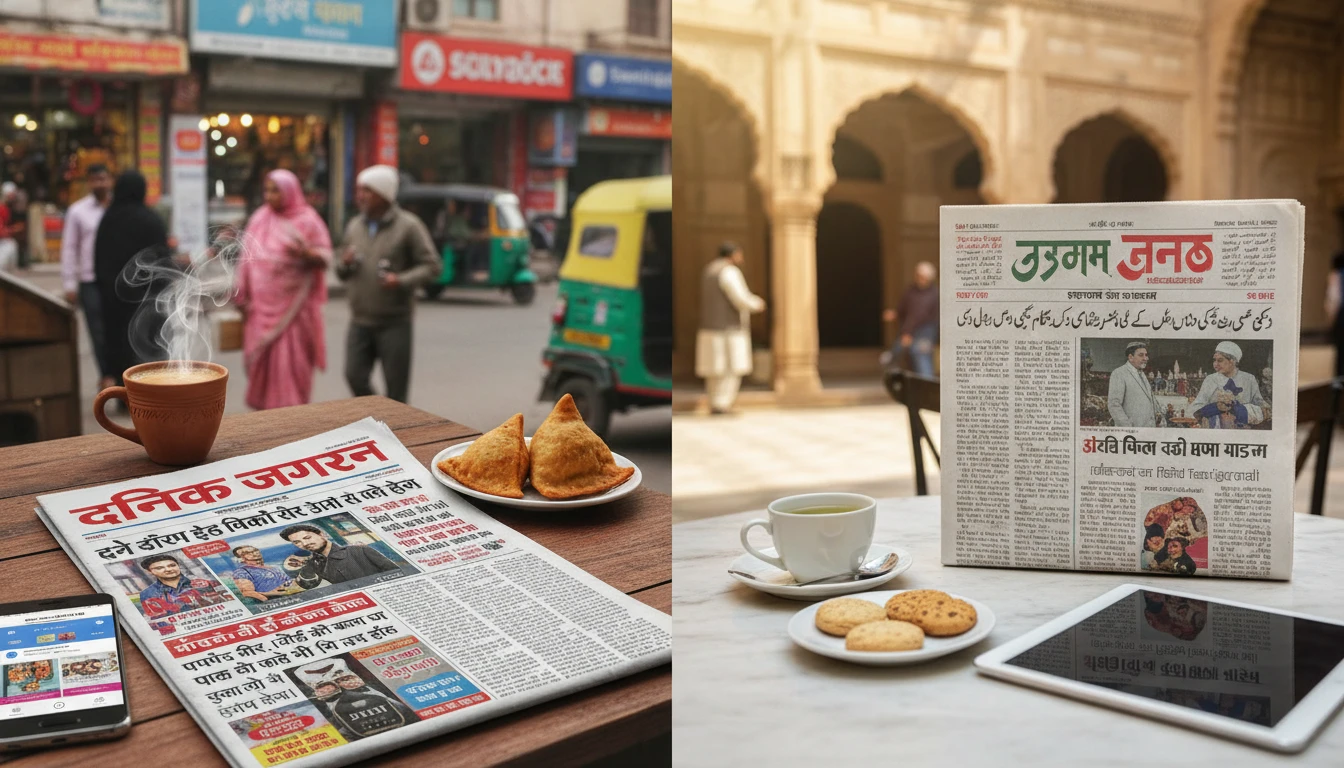
  • Hindi vs Urdu: Understanding the Differences & Similarities - Complete Guide

    Use our [learn Hindi guide](/blog/learn-hindi-for-beginners) to start.

    Learn Urdu If:

  • Planning to visit/live in Pakistan
  • Interested in Urdu poetry (ghazals, nazms)
  • Want to study Islamic texts in original script
  • Learn Both If:

  • You love South Asian culture
  • Want maximum communication range
  • Interested in comparative linguistics
  • Practical Learning Tips

    Start with Spoken Hindustani

  • Learn [100 common words](/blog/100-common-hindi-words)
  • Practice [daily sentences](/sentences/daily-use)
  • Master [pronunciation](/blog/hindi-pronunciation-guide)
  • Then Choose Your Script

  • Hindi script: Use our [Barakhadi chart](/barakhadi)
  • Practice with [typing tool](/typing)
  • Expand Vocabulary

  • Learn both Sanskrit and Persian/Arabic-origin words
  • Understand context for formal vs informal
  • Watch content in both languages
  • Cultural Context

    Hindi

  • Official language of India (along with English)
  • Used in government, education, media
  • Growing global influence
  • Urdu

  • National language of Pakistan
  • Rich literary tradition
  • Renowned for poetry and ghazals
  • Common Misconceptions

    Myth #1: "They're completely different languages"

    Reality: Spoken forms are highly similar

    Myth #2: "You can't understand one if you learn the other"

    Reality: Spoken comprehension is 80-90%

    Myth#3: "Grammar is different"

    Reality: Grammar structures are nearly identical

    Conclusion

    Hindi and Urdu are more similar than different. Learning one gives you access to the other, especially in spoken form. The script difference is the main barrier, but vocabulary overlap is high for everyday communication.

    Start with spoken Hindustani using our [conversation guide](/blog/hindi-conversation-phrases), then choose which script to master!