Complete Hindi Vocabulary Guide
Welcome to the ultimate Hindi vocabulary resource. This comprehensive guide will help you build a strong foundation in Hindi words and phrases, organized by categories for easy learning. Whether you're traveling to India, connecting with Hindi speakers, or pursuing language mastery, this vocabulary guide provides everything you need.
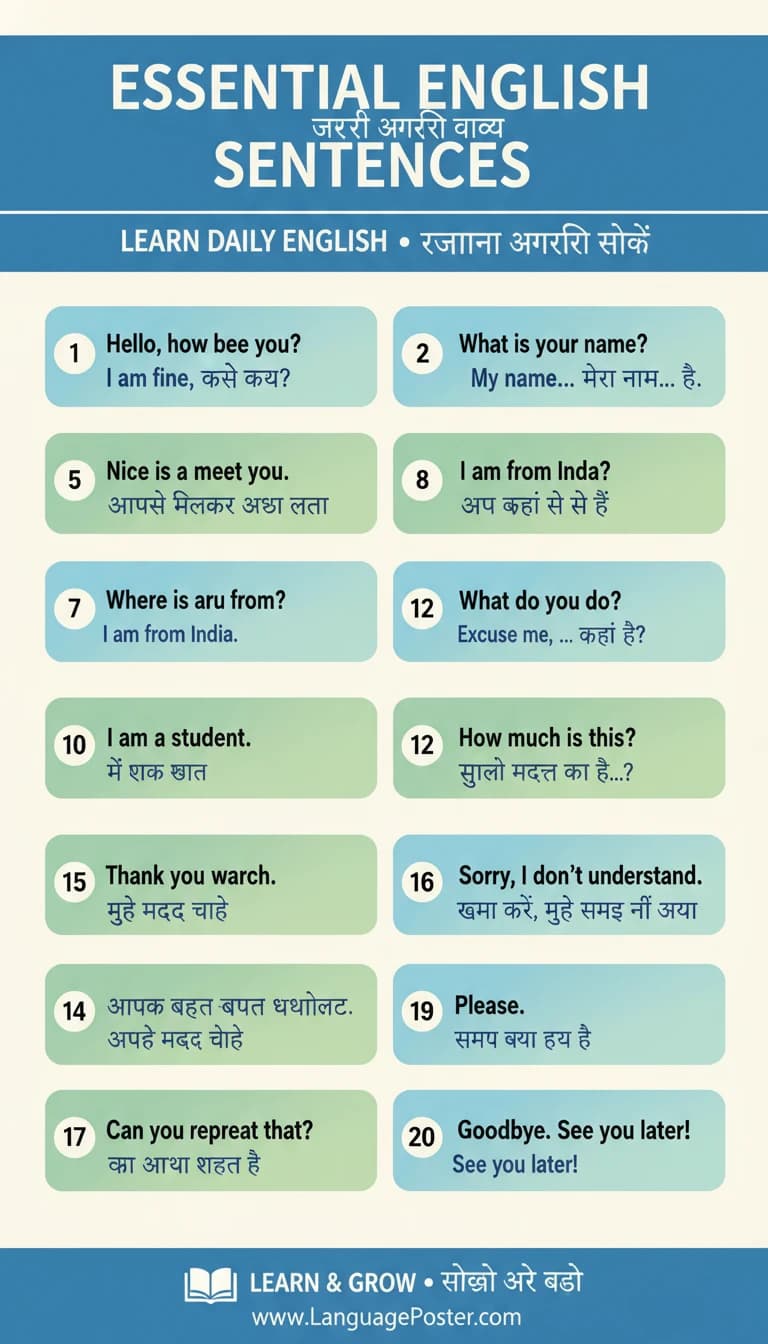
Why Building Vocabulary is Essential
Vocabulary is the foundation of language learning. While grammar provides the structure, words give meaning to your communication. Studies show that knowing just 1,000 of the most common words in any language allows you to understand approximately 80% of everyday conversation. In Hindi, this principle holds true, making vocabulary acquisition one of the most efficient paths to fluency.
Hindi vocabulary comes from multiple sources - primarily Sanskrit (for formal/religious contexts), Arabic and Persian (through Urdu influence), and English (in modern usage). Understanding these origins helps you recognize patterns and remember words more effectively. This linguistic diversity makes Hindi rich and expressive, with often multiple words for the same concept at different formality levels.
How to Learn Hindi Vocabulary Effectively
7 Proven Strategies for Vocabulary Mastery
- Spaced Repetition: Review words at increasing intervals (day 1, 3, 7, 14, 30)
- Contextual Learning: Learn words within sentences, not isolation
- Active Use: Practice speaking and writing with new words immediately
- Visual Association: Connect words with images or mental pictures
- Categorization: Group related words by theme or category
- Etymology Study: Understanding word origins aids retention
- Daily Goals: Set achievable targets (10-20 new words per day)
Essential Everyday Vocabulary
These fundamental words form the backbone of Hindi communication. Master these first before moving to specialized vocabulary:
Basic Greetings and Courtesy
Greetings:
- नमस्ते (namaste) - Hello/Goodbye
- नमस्कार (namaskar) - Formal hello
- सुप्रभात (suprabhaat) - Good morning
- शुभ रात्रि (shubh raatri) - Good night
Courtesy Words:
- धन्यवाद (dhanyavaad) - Thank you
- कृपया (kripya) - Please
- माफ़ कीजिए (maaf kijiye) - Excuse me/Sorry
- स्वागत है (swagat hai) - Welcome
Common Questions and Responses
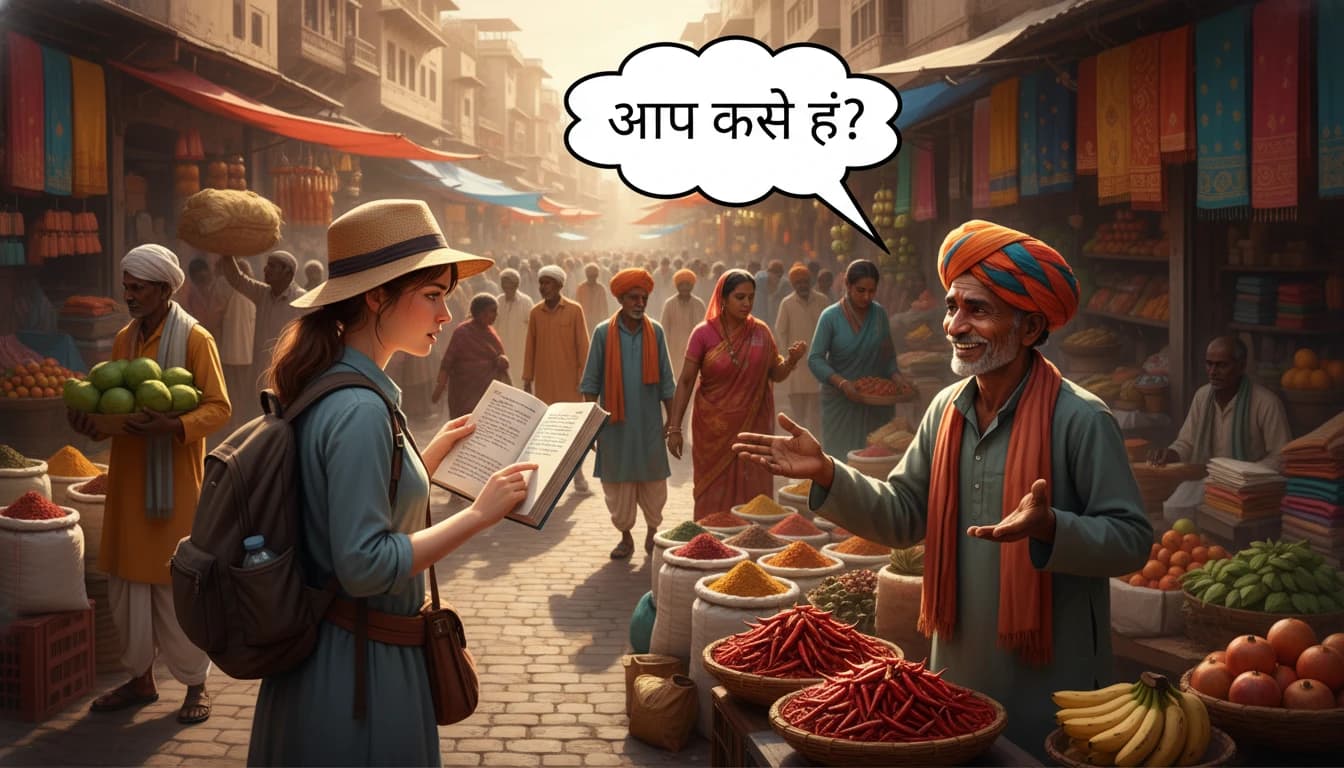
Knowing how to ask and answer basic questions is crucial for survival Hindi:
| Hindi | Transliteration | Meaning |
|---|---|---|
| आप कैसे हैं? | Aap kaise hain? | How are you? (formal) |
| मैं ठीक हूँ | Main theek hoon | I am fine |
| आपका नाम क्या है? | Aapka naam kya hai? | What is your name? |
| कहाँ है? | Kahaan hai? | Where is? |
| कितना? | Kitna? | How much? |
Thematic Vocabulary Categories
Learning vocabulary by theme helps your brain create associations and improves retention. Here's a comprehensive breakdown:
1. Family and Relationships (परिवार)
Family is central to Indian culture, and Hindi has specific words for many family relationships that don't exist in English:
Immediate Family:
- माता/माँ (maata/maa) - Mother
- पिता/पापा (pita/papa) - Father
- भाई (bhai) - Brother
- बहन (bahan) - Sister
- बेटा (beta) - Son
- बेटी (beti) - Daughter
Extended Family:
- दादा (dada) - Paternal grandfather
- दादी (dadi) - Paternal grandmother
- नाना (nana) - Maternal grandfather
- नानी (nani) - Maternal grandmother
- चाचा (chacha) - Paternal uncle
- मामा (mama) - Maternal uncle
2. Time, Days, and Seasons (समय)
Time-related vocabulary is essential for scheduling and daily conversation:
Days of Week:
- सोमवार (somvar) - Monday
- मंगलवार (mangalvar) - Tuesday
- बुधवार (budhvar) - Wednesday
- गुरुवार (guruvar) - Thursday
- शुक्रवार (shukravar) - Friday
- शनिवार (shanivar) - Saturday
- रविवार (ravivar) - Sunday
Time of Day:
- सुबह (subah) - Morning
- दोपहर (dopahar) - Afternoon
- शाम (shaam) - Evening
- रात (raat) - Night
- आज (aaj) - Today
- कल (kal) - Yesterday/Tomorrow
Seasons:
- बसंत (basant) - Spring
- ग्रीष्म (grishma) - Summer
- वर्षा (varsha) - Monsoon
- शरद (sharad) - Autumn
- हेमंत (hemant) - Pre-winter
- शीत (sheet) - Winter
For complete day names with pronunciation, visit our dedicated Days page.
3. Food and Dining (खाना)
Indian cuisine is world-famous, and knowing food vocabulary enhances your cultural experience:
Common Foods:
- रोटी (roti) - Indian bread
- चावल (chawal) - Rice
- दाल (daal) - Lentils
- सब्ज़ी (sabzi) - Vegetable curry
- पनीर (paneer) - Indian cottage cheese
- आचार (achar) - Pickle
- नमक (namak) - Salt
- मिर्च (mirch) - Chili/Pepper
Beverages:
- पानी (paani) - Water
- चाय (chai) - Tea
- कॉफ़ी (coffee) - Coffee
- दूध (doodh) - Milk
- जूस (juice) - Juice
- लस्सी (lassi) - Yogurt drink
Explore food vocabulary in depth: Fruits and Vegetables.
4. Colors and Descriptions (रंग)
Colors are essential for describing the world around you:
Learn all colors with examples on our Colors page.

5. Nature and Animals (प्रकृति और जानवर)
Nature vocabulary enriches your descriptive abilities and cultural understanding:
Animals:
- कुत्ता (kutta) - Dog
- बिल्ली (billi) - Cat
- गाय (gaay) - Cow
- हाथी (hathi) - Elephant
- शेर (sher) - Lion
- बाघ (baagh) - Tiger
Nature:
- पेड़ (ped) - Tree
- फूल (phool) - Flower
- पत्ता (patta) - Leaf
- नदी (nadi) - River
- पहाड़ (pahaad) - Mountain
- सूरज (sooraj) - Sun
Browse flowers: Flowers page
6. Body Parts (शरीर के अंग)
Essential for medical situations and daily descriptions:
- सिर (sir) - Head
- बाल (baal) - Hair
- आँख (aankh) - Eye
- नाक (naak) - Nose
- मुँह (munh) - Mouth
- कान (kaan) - Ear
- हाथ (haath) - Hand
- पैर (pair) - Leg/Foot
- उँगली (ungli) - Finger
- पीठ (peeth) - Back
- दिल (dil) - Heart
- पेट (pet) - Stomach
- दाँत (daant) - Tooth
- जीभ (jeebh) - Tongue
- गला (gala) - Throat
Complete body parts list: Body Parts page
7. Common Verbs (क्रिया)
Verbs are action words that make your sentences dynamic. Here are the most common:
| Hindi (Infinitive) | Transliteration | Meaning |
|---|---|---|
| होना | hona | to be |
| करना | karna | to do |
| जाना | jaana | to go |
| आना | aana | to come |
| खाना | khaana | to eat |
| पीना | peena | to drink |
| देखना | dekhna | to see/watch |
| सुनना | sunna | to hear/listen |
| बोलना | bolna | to speak |
| पढ़ना | padhna | to read/study |
8. Adjectives (विशेषण)
Adjectives add color and description to your Hindi:
Size & Quantity:
- बड़ा (bada) - Big
- छोटा (chhota) - Small
- लंबा (lamba) - Long/Tall
- ऊँचा (ooncha) - High
- मोटा (mota) - Thick/Fat
- पतला (patla) - Thin
Quality:
- अच्छा (achchha) - Good
- बुरा (bura) - Bad
- सुंदर (sundar) - Beautiful
- नया (naya) - New
- पुराना (puraana) - Old
- साफ़ (saaf) - Clean
Vocabulary Learning Resources
To accelerate your Hindi vocabulary acquisition, leverage these specialized resources:
📚 Curated Word Lists
- 30 Essential Words - Perfect for Day 1
- 50 Important Words - Week 1 goal
- 100 Advanced Words - Month 1 target
- Daily Word Meanings - Fresh vocabulary
🎯 Practice Tools
- Translation Tool - Check word meanings
- Hindi Dictionary - 10,000+ words
- Hindi Typing - Practice writing
- Example Sentences - See words in context
Vocabulary Milestones
Your Learning Journey
100 Words (Week 1-2)
Basic survival Hindi for greetings, numbers, common objects
300 Words (Month 1)
Simple conversations, asking directions, ordering food
1,000 Words (3-4 Months)
Understanding 80% of everyday conversations
3,000+ Words (6-12 Months)
Conversational fluency, reading newspapers, watching movies
Memory Techniques for Hindi Vocabulary
1. Mnemonics and Sound Associations
Create memorable connections: "पानी" (paani - water) sounds like "pani" (Spanish for bread), but remember "पानी is PA(in)-NI(l) = water from the Nile"
2. Root Word Families
Learn word families together: काम (kaam - work), कामगार (kaamgaar - worker), काम करना (kaam karna - to work)
3. Sentence Integration
Always learn words in sentences, not isolation. Instead of just "सुंदर" (sundar), learn "यह फूल बहुत सुंदर है" (This flower is very beautiful)
4. Cultural Context
Understanding cultural significance aids memory: "नमस्ते" literally means "I bow to the divine in you" - deeper than just "hello"
Common Vocabulary Mistakes to Avoid
⚠️ Watch Out For These Errors:
- False Friends: "Actually" ≠ अक्सर (aksar), which means "often"
- Gender Confusion: पानी (water) is masculine in Hindi, चाय (tea) is feminine
- Kaal/Kal Confusion: Both mean "time" but in different contexts (period vs yesterday/tomorrow)
- Formal vs Informal: Using तू (tu) when आप (aap) is appropriate
Next Steps in Your Vocabulary Journey
Ready to Take Action?
- Start with our 30 Essential Words today
- Set a goal: Learn 10 new words daily for 30 days
- Practice with Translation Tool daily
- Review vocabulary using spaced repetition (Day 1, 3, 7, 14, 30)
- Use words in Sentences to solidify learning
- Track progress - celebrate reaching 100, 300, 1000 words!
Frequently Asked Questions
How many Hindi words do I need to know to be fluent?▶
Knowledge of 1,000 common words allows you to understand about 80% of everyday conversation. For fluency, aim for 3,000-5,000 words, which typically takes 6-12 months of consistent learning.
What is the best way to memorize Hindi vocabulary?▶
Use spaced repetition (review on day 1, 3, 7, 14, 30), learn words in context through sentences, create visual associations, and practice using new words in conversation regularly.
Should I learn Hindi words with or without Devanagari script?▶
Learn both together - the pronunciation (transliteration) helps you speak, while Devanagari script helps you read and write. This dual approach accelerates overall Hindi proficiency.
How long does it take to build a strong Hindi vocabulary?▶
Learning 10 words daily, you can master 300 words in a month and 1,000 words in 3-4 months. With consistent effort, conversational vocabulary is achievable within 6 months.
Are there Hindi words similar to English?▶
Yes, many modern Hindi words are borrowed from English (especially technical terms), and some Sanskrit-origin words have cognates in English through Indo-European language connections.