How to Learn Hindi for Beginners: Complete Guide 2025
Everything you need to know to start learning Hindi as a beginner. From basic phrases to grammar rules, this comprehensive guide covers it all.

How to Learn Hindi for Beginners: Complete Guide 2025
Learning Hindi can seem challenging at first, but with the right approach and resources, you can master this beautiful language. This comprehensive guide will walk you through everything you need to know to start your Hindi learning journey.
Why Learn Hindi?
Hindi is the fourth most spoken language in the world, with over 600 million speakers. Here's why learning Hindi is valuable:
Understanding the Hindi Script
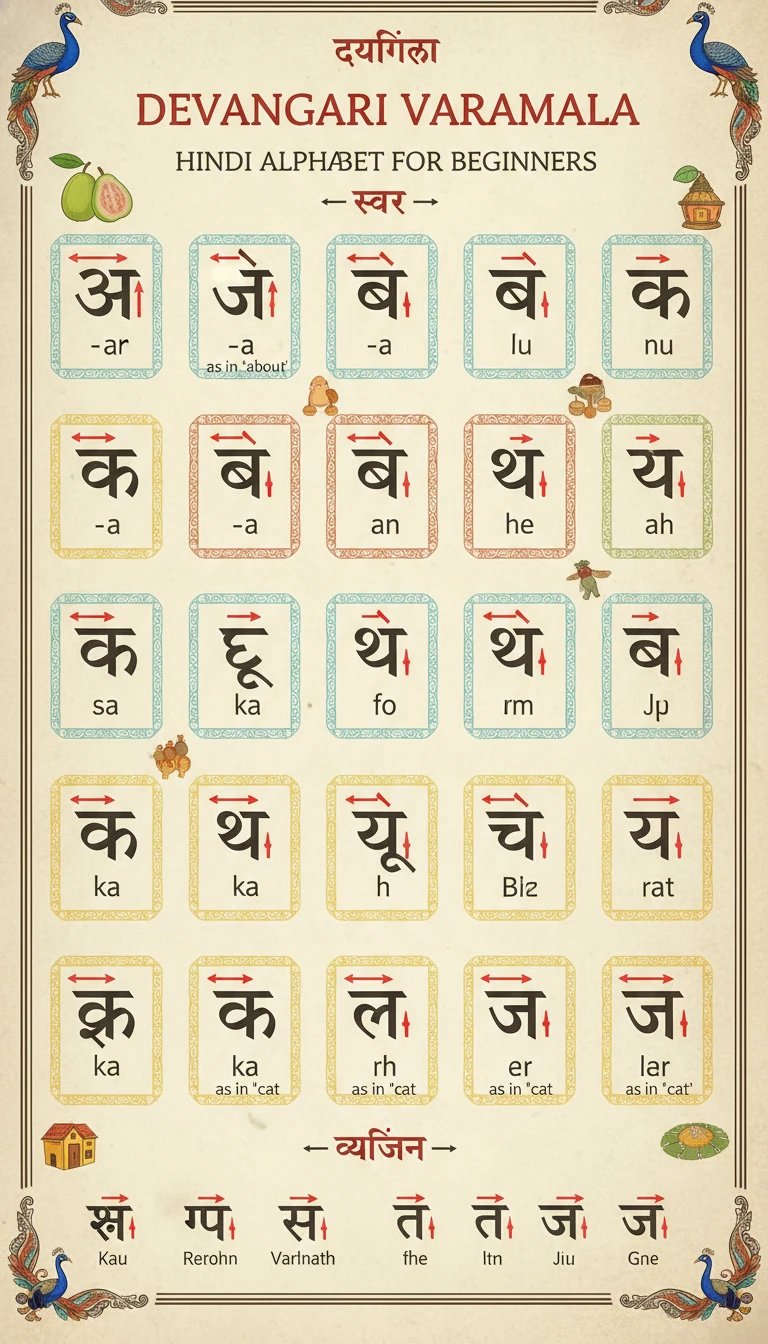
Hindi uses the Devanagari script, which is completely different from the Latin alphabet. Don't let this intimidate you!
The Devanagari Alphabet
The Hindi alphabet consists of:
Learning tip: Start with the vowels first. They're the foundation of the script and easier to memorize.
Barakhadi - The Key to Reading
The Barakhadi chart shows how consonants combine with vowels to form syllables. This is essential for reading Hindi.
Example with क (ka):
Practice the Barakhadi daily for 15 minutes, and you'll be reading Hindi within weeks!
Essential Hindi Phrases for Beginners
Start with these 20 must-know phrases:
Greetings
Questions
Useful Phrases
Hindi Grammar Basics
Word Order
Hindi follows Subject-Object-Verb (SOV) order, unlike English's Subject-Verb-Object (SVO).
English: I eat food (SVO)
Hindi: मैं खाना खाता हूं (Main khaana khaata hoon) - I food eat (SOV)
Gender System
Every Hindi noun has a gender (masculine or feminine). This affects verbs and adjectives.
Masculine words often end in: -आ (-aa)
Feminine words often end in: -ई (-ee) or -इ (-i)
Verb Conjugation
Hindi verbs change based on:
Example with "to go" (जाना - jaana):
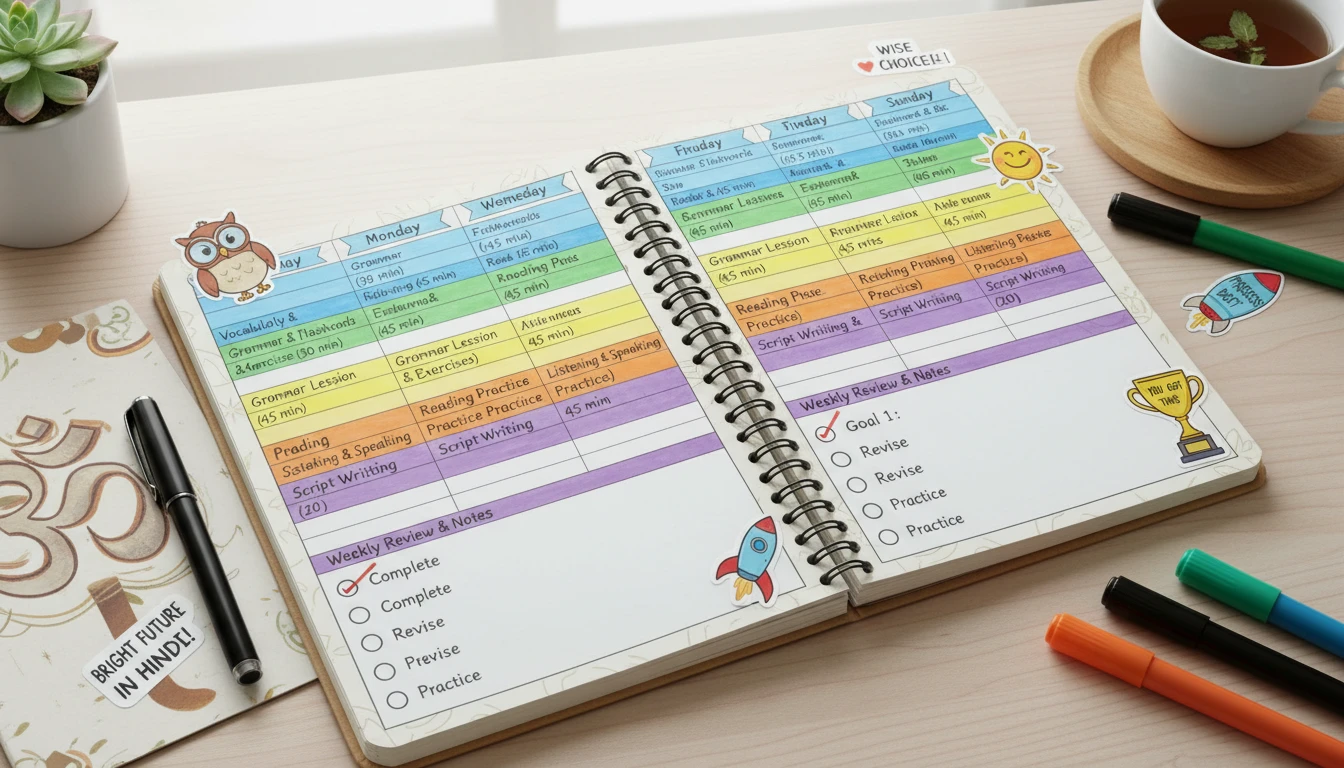
7-Day Learning Plan for Beginners
Day 1-2: Alphabet & Sounds
Day 3-4: Basic Consonants
Day 5-6: Common Words
Day 7: Review & Practice
Best Resources for Learning Hindi
Free Online Resources
Paid Resources
Common Mistakes to Avoid
1. Pronouncing Retroflex Sounds Wrong
Hindi has retroflex consonants (ट, ठ, ड, ढ) that don't exist in English. These are pronounced with the tongue curled back.
Wrong: Saying ट like "t" in "top"
Right: Curling tongue back, touching roof of mouth
2. Ignoring Gender Rules
Every noun has a gender. Using the wrong gender makes your Hindi sound unnatural.
Practice tip: Learn the gender with each new noun from the start.
3. Direct Translation from English
Word-for-word translation doesn't work due to different grammar structures.
Wrong: मैं हूं खुश (Main hoon khush) - I am happy (SVO)
Right: मैं खुश हूं (Main khush hoon) - I happy am (SOV)
4. Not Practicing Speaking
Reading is important, but speaking practice is essential for fluency.
Solution: Use language exchange apps like HelloTalk or Tandem to practice with native speakers.
Daily Practice Routine (30 Minutes)
Break your 30-minute daily practice into:
10 Minutes: Script Practice
10 Minutes: Listening
10 Minutes: Speaking/Writing
Tips for Faster Progress
1. Immerse Yourself
2. Use Spaced Repetition
3. Focus on High-Frequency Words
The 1000 most common Hindi words make up 80% of everyday conversation.
Priority: Learn these common words first instead of random vocabulary.
4. Practice with Native Speakers
Join online communities:
5. Be Consistent
30 minutes daily is better than 3 hours once a week.
Set a schedule: Same time every day builds a strong habit.
Measuring Your Progress
Beginner Level (0-3 months)
Intermediate Level (3-12 months)
Advanced Level (1-2 years)
Conclusion
Learning Hindi as a beginner requires dedication, but it's absolutely achievable. Start with the script, master basic phrases, understand grammar fundamentals, and practice consistently every day.
Remember: Every fluent Hindi speaker was once a beginner. The key is to start today and stay consistent.
Your first step: Learn the Hindi vowels today. Just 11 simple sounds to unlock an entire language!
Ready to start? Check out our [30 word meanings](/word-meanings/30-words) to begin building your vocabulary, or try our [translation tool](/translate) to practice.